

A landing beach could look clear from a ship and still stop an invasion. A reef beneath the surface, or an obstacle in the wrong place, could leave landing craft stranded before the troops reached shore. In the Pacific during World War II, the Navy sent swimmers ahead to find out what was really there.
Those Underwater Demolition Teams are a good place to begin the story behind a Navy SEAL watch. The SEAL Teams themselves came later, in 1962. Their roots run through the UDTs, whose work helped give underwater timekeeping a very practical purpose.
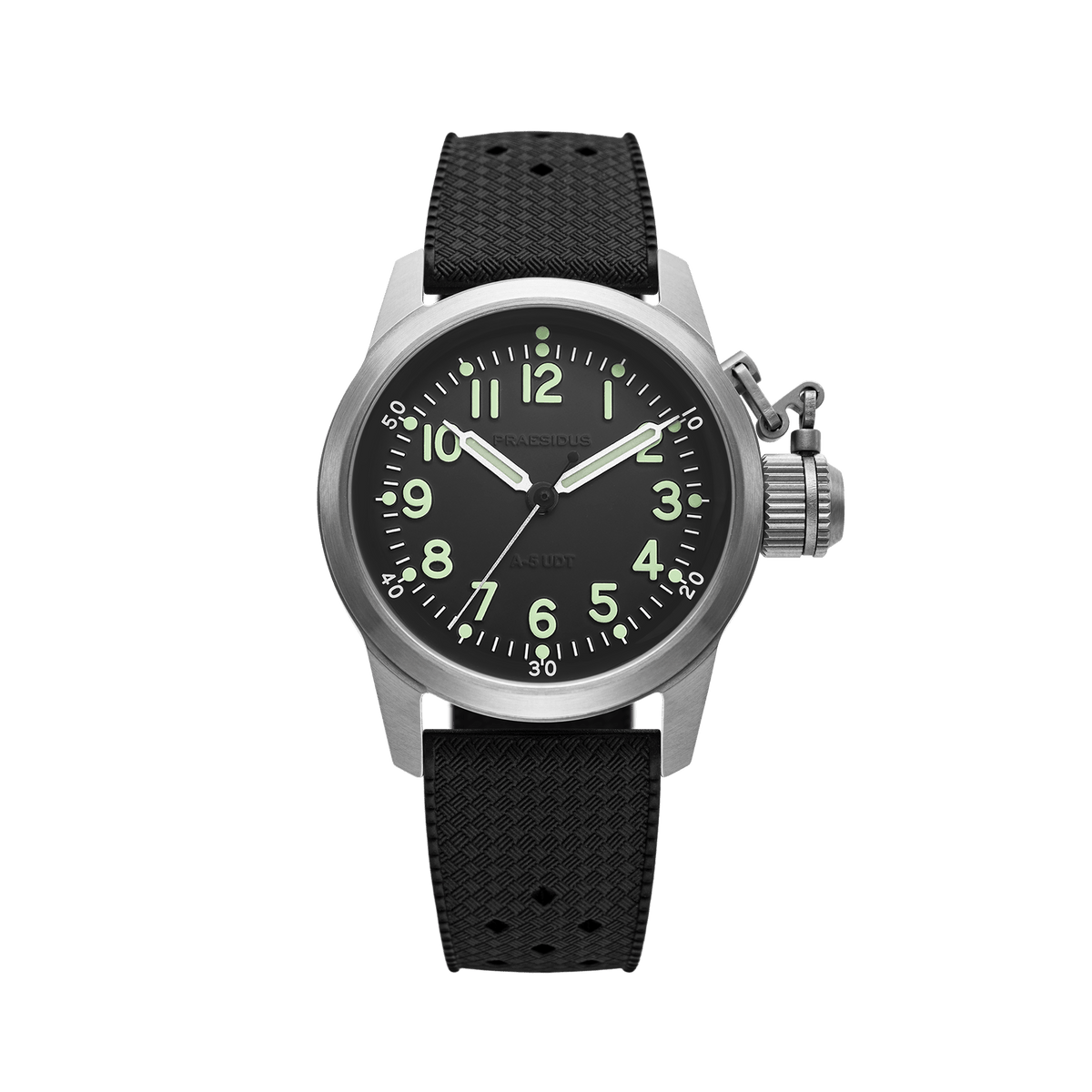
Our A-5 UDT takes its inspiration from those earlier BUSHIPS canteen watches. To understand its unusual shape, it helps to start with the swimmers who needed them.
1944: the swimmers who went in before the landings
The difficult landing at Tarawa in November 1943 made the need for better underwater reconnaissance painfully clear. Coral reefs had obstructed the approach to shore. Knowing the beach from a map wasn't enough; someone needed to examine the water leading to it.
The provisional UDT-1 and UDT-2 first saw combat on January 31, 1944, during Operation Flintlock in the Marshall Islands. Their job combined reconnaissance with clearing obstacles ahead of amphibious landings. The National Navy UDT-SEAL Museum's history follows that development and distinguishes the Pacific UDTs from the Naval Combat Demolition Units that operated at Normandy.
That last detail is easy to lose when the whole story gets shortened to “WWII frogmen.” These were related parts of naval special warfare's beginnings, but they weren't interchangeable unit names.
Why the watch needed more than a readable dial
A wristwatch was only useful in this setting if water stayed out of it. The dial could be perfectly clear, but a vulnerable winding crown left a route into the movement. The canteen watch's answer was wonderfully direct: put a protective screw-down cap over the crown.
The cap gives these watches their unusual outline. It resembles the closure of a small water canteen, rather than the exposed crown familiar on most everyday watches. Once you understand what it was protecting, the oversized shape makes sense.
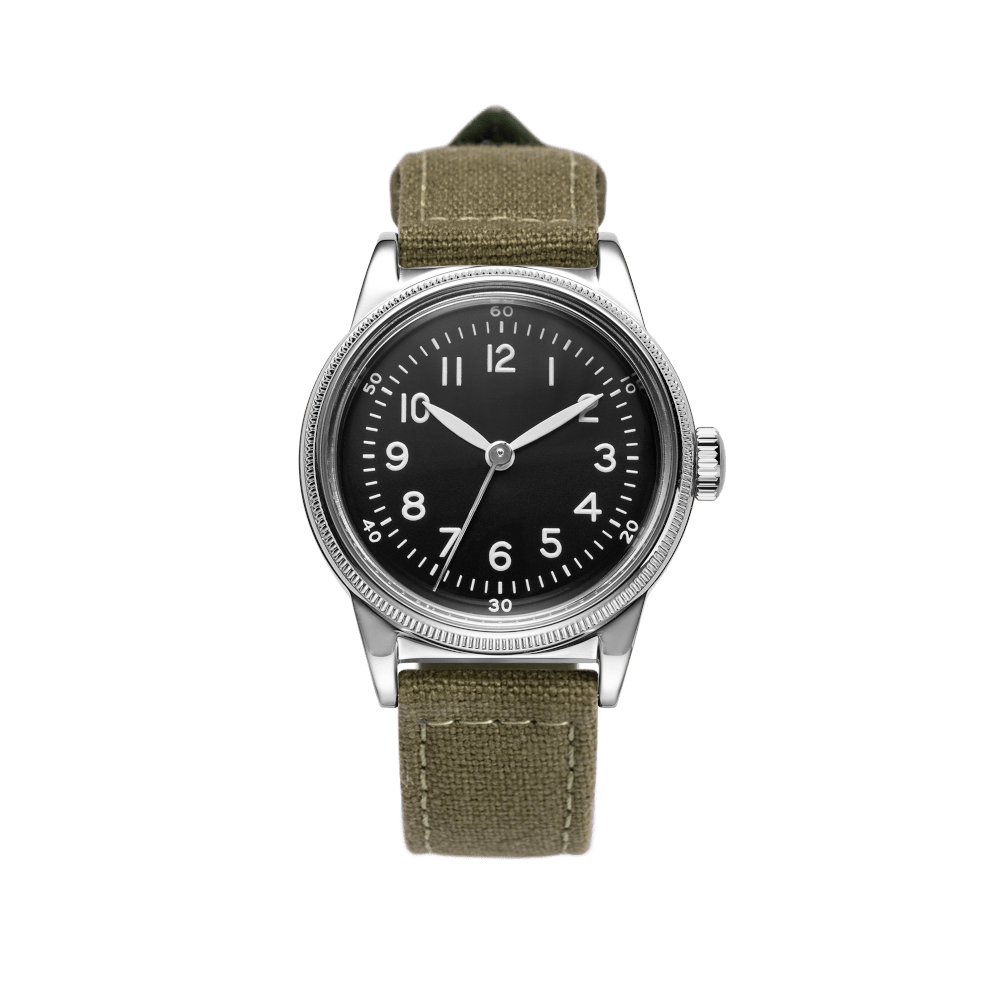
Hamilton is one documented manufacturer in this history. Its own account traces its Frogman watches to wristwatches worn by U.S. Navy underwater demolition teams during WWII, with canteen-style crown protection and a legible dial. BUSHIPS refers to the Navy's Bureau of Ships, not a watch brand. You can explore that equipment story further in our BUSHIPS canteen-watch article.
It also explains why a naval watch from the 1940s can look so different from the rotating-bezel dive watches that many people picture today. The feature that catches your eye was a response to keeping water away from the mechanism.
1962: the UDT connection becomes the SEAL connection
SEAL stands for Sea, Air and Land. When SEAL Teams ONE and TWO were established in January 1962, their personnel came from the Underwater Demolition Teams. The UDT-SEAL Museum's account of their formation describes a broader mission that included unconventional warfare and clandestine operations.
This wasn't simply a change of name for every UDT. Both organizations continued to exist. In May 1983, the remaining UDTs were redesignated as SEAL Teams or delivery-vehicle teams, as recorded in Naval Special Warfare Command's history.
What does “Navy SEAL watch” actually tell you?
On its own, less than you might think. Before comparing watches, work out which of these claims is being made:
- Military issue: the watch was supplied through a military procurement or issue process. Look for documentation tied to the model and period, not just a military-looking dial.
- Personally worn: an individual servicemember wore the watch. A well-documented photograph or service history can support that particular connection, but it doesn't prove the model was standard equipment across a unit.
- Historically inspired: a modern watch borrows design ideas from earlier equipment. Its appeal rests on the quality of that interpretation and the watch you can buy today.
If you're considering an original, our vintage military watch guide explains what to examine beyond the name: markings, condition, originality and documentation. An old military connection also says nothing about a surviving watch's water resistance today.

The Praesidus A-5 UDT: keeping the unusual part
The A-5 UDT takes its inspiration from the BUSHIPS design, and keeps the feature that makes it immediately recognizable: that prominent crown and its protection. The shape itself tells you where the idea came from.
You can enjoy that unusual design without buying an eighty-year-old watch. The A-5 has a 38mm stainless steel case, a double-domed sapphire crystal with anti-reflection coating and a 20 ATM water-resistance rating.
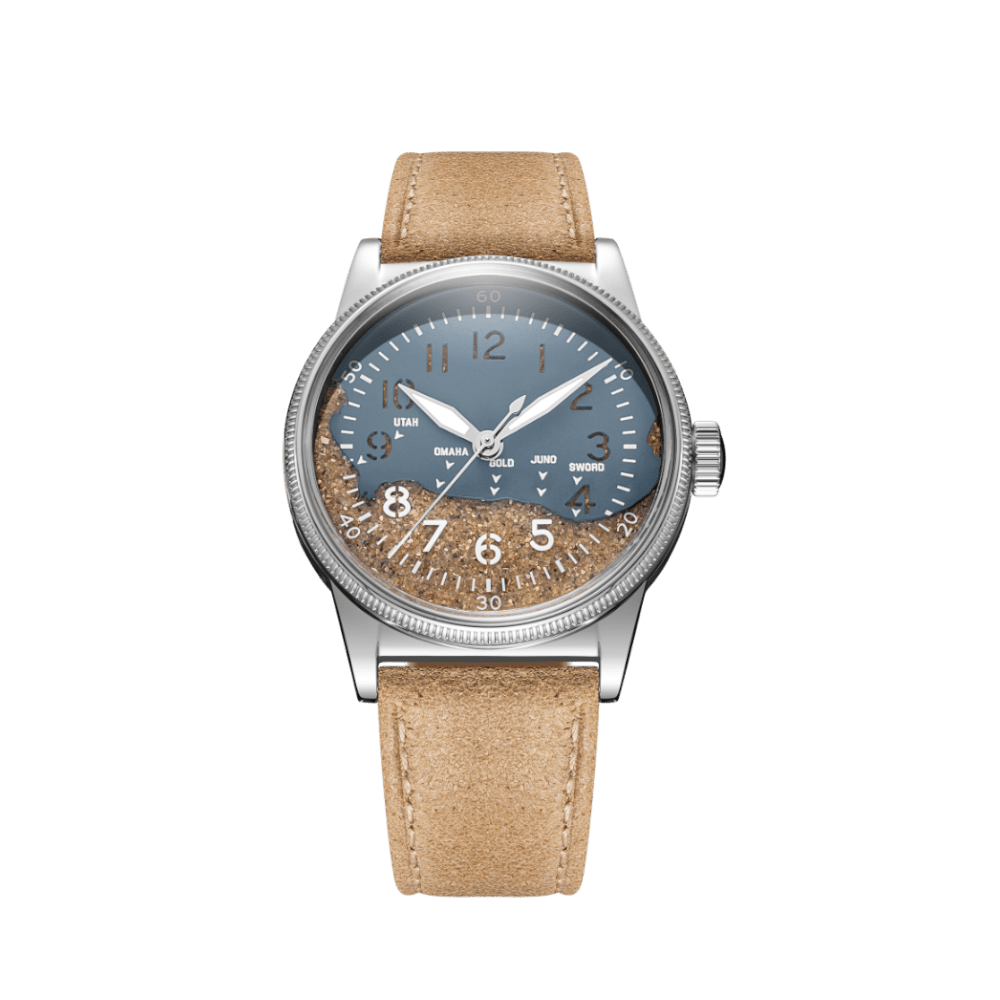
There are also useful choices within the collection. The A-5 UDT Black keeps a restrained black dial and contrasting luminous markings. If you like the case but want more color, the Blue Sunray adds a finish that catches the light.
The collection lists Miyota 9039 and Soprod P024 automatic configurations; check the selected product's specification rather than assuming every A-5 has the same movement. Strap and bracelet options also vary by reference. Start with the dial you prefer, then compare the exact configuration you'll be wearing.
Navy SEAL watch FAQs
Were Navy SEALs around during World War II?
No. SEAL Teams ONE and TWO were established in January 1962. Their predecessors included WWII Underwater Demolition Teams and other maritime special-mission units. Calling the 1944 UDT swimmers “SEALs” skips an important part of the history: their work helped form the capabilities and personnel base from which the later teams developed.
Is a BUSHIPS watch the same as a Navy SEAL watch?
No. BUSHIPS refers to the U.S. Navy's Bureau of Ships, and the canteen watches discussed here belong to the earlier underwater-demolition story. A later SEAL connection would need its own supporting evidence. The historical relationship between the teams doesn't automatically establish the service history of a particular watch.
Was the Praesidus A-5 UDT issued to Navy SEALs?
No. The A-5 UDT is a modern Praesidus watch inspired by WWII BUSHIPS canteen-watch design. Its connection is to that earlier equipment and the Underwater Demolition Teams' history. It combines the distinctive shape with modern materials and automatic movements for customers who want to wear the design today.
How should I choose a watch with this history?
Decide whether you want a documented vintage artifact or a modern watch inspired by the period. For an original, provenance and condition come first. For a modern watch, compare the actual case size, movement, water-resistance rating and strap. Historical inspiration should help explain the watch, not replace its specifications.
Choose the design that brought you to the story
If the WWII swimmer connection is what interests you, the A-5 UDT is the place to start in our range. Pick the black dial for the more restrained look, or a blue reference if you want the same distinctive case with a different dial treatment. Explore the A-5 UDT collection and compare the available configurations.
Historical references: National Navy UDT-SEAL Museum, WWII origins; formation of the SEAL Teams; Naval Special Warfare Command; Hamilton's account of its wartime Frogman origins.

Leave a comment
This site is protected by hCaptcha and the hCaptcha Privacy Policy and Terms of Service apply.