

Getting an army across the English Channel was only part of the problem on D-Day. The men still had to get from ships offshore onto a defended beach. A Higgins boat made that last stretch possible with a shallow wooden hull and a ramp that dropped at the bow. Soldiers could leave through the front, carrying their equipment toward shore.
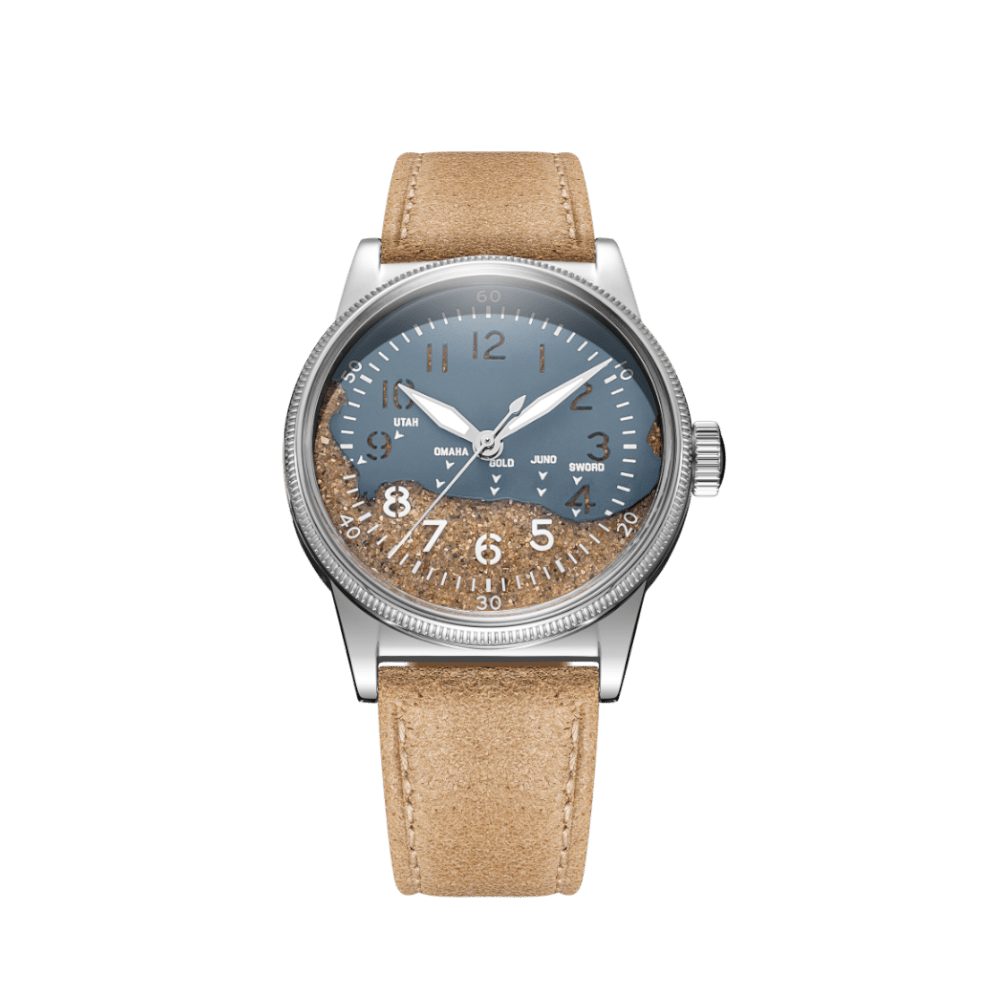
The best-known Higgins boat was the LCVP, short for Landing Craft, Vehicle, Personnel. Its story runs directly through Utah Beach on June 6, 1944, the place commemorated in our A-11 Utah Beach Sand MK2 Higgins Blue. To understand the name on the watch, start with the boat and the job it had to do.
What was a Higgins boat?
Andrew Jackson Higgins built boats in New Orleans, where navigating shallow water was a practical concern long before the war. His Eureka design was developed for swamp and marsh work. The National WWII Museum traces the LCVP's development back to that shallow-draft boat.
“Draft” is the depth of a boat below the waterline. A boat that sits less deeply can approach a beach where a larger ship cannot go. For an amphibious landing, that turns a stretch of coastline into a possible unloading point, without requiring a dock.
The National Museum of the U.S. Navy describes the LCVP as a wooden craft approximately 36 feet long, with a crew of four and room for about 36 servicemen. It could reach roughly 12 knots. Those figures describe a small working boat, built to carry a useful load between a transport and the shore.
Why the bow ramp mattered
The ramp gave the boat an exit where the beach was. Lower it, and troops could move forward out of the cargo space. Its broad opening also explains the “Vehicle” in LCVP: the design could carry more than men. The National WWII Museum's Higgins boat overview explains how landing across open beaches gave commanders more places to attack and forced defenders to cover more coastline.
That flexibility mattered enormously. A port is a fixed destination, with approaches an enemy can prepare to defend. Landing craft let an invasion force begin on a beach and work inland. The boat was one part of a much larger operation, alongside the ships carrying it, the crews steering it and the forces clearing the way ashore.
Higgins boats at Utah Beach on D-Day
At Utah Beach, the first assault wave consisted of 20 LCVPs. Each carried a 30-man team from the 8th Infantry, according to the U.S. Army's official account of the seaborne assault. That is the actual load for this wave, rather than the boat's general capacity.
The ramps came down around 6:30 a.m. The soldiers still had to wade through waist-deep water for the final 100 yards or more. A ramp did not guarantee a dry landing.
They also came ashore about 2,000 yards south of the intended beaches. The Army account identifies lost control vessels, strong currents and obscured landmarks among the difficulties. Brigadier General Theodore Roosevelt Jr. reconnoitered the ground and helped coordinate the attack from where the men had landed.
More LCVPs followed with troops and engineers. Other craft brought tanks and heavier equipment. The Higgins boat had a specific place in that fleet: carrying men and useful loads across the gap between transport ships and the beach.
From Utah Beach to the Higgins Blue dial
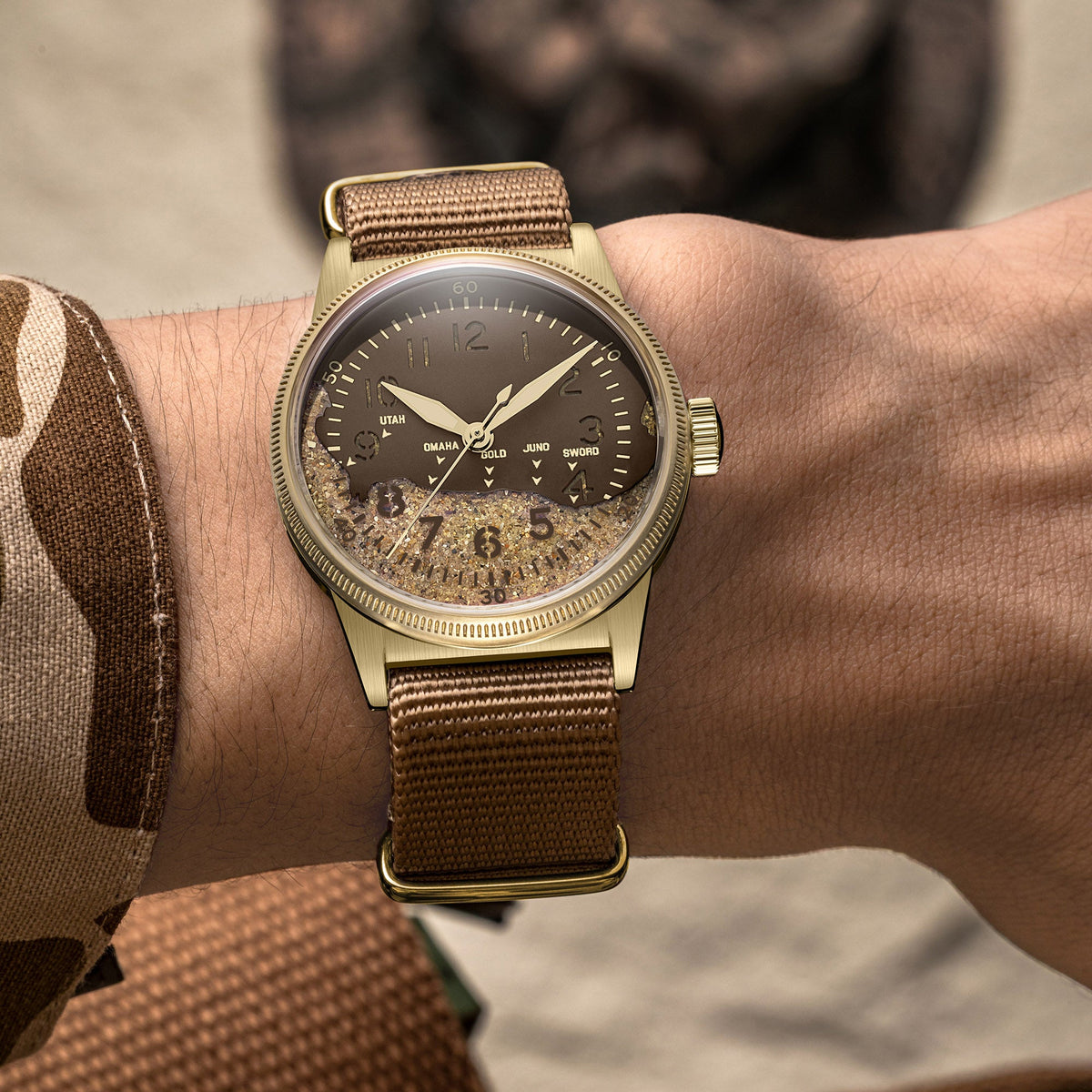
Our Higgins Blue takes its name into a modern commemorative watch. Its dial uses real sand collected from Utah Beach, beneath a blue upper layer cut to follow the Normandy coastline. The five landing beaches are marked across it: Utah, Omaha, Gold, Juno and Sword. You can follow the geography while reading the time.
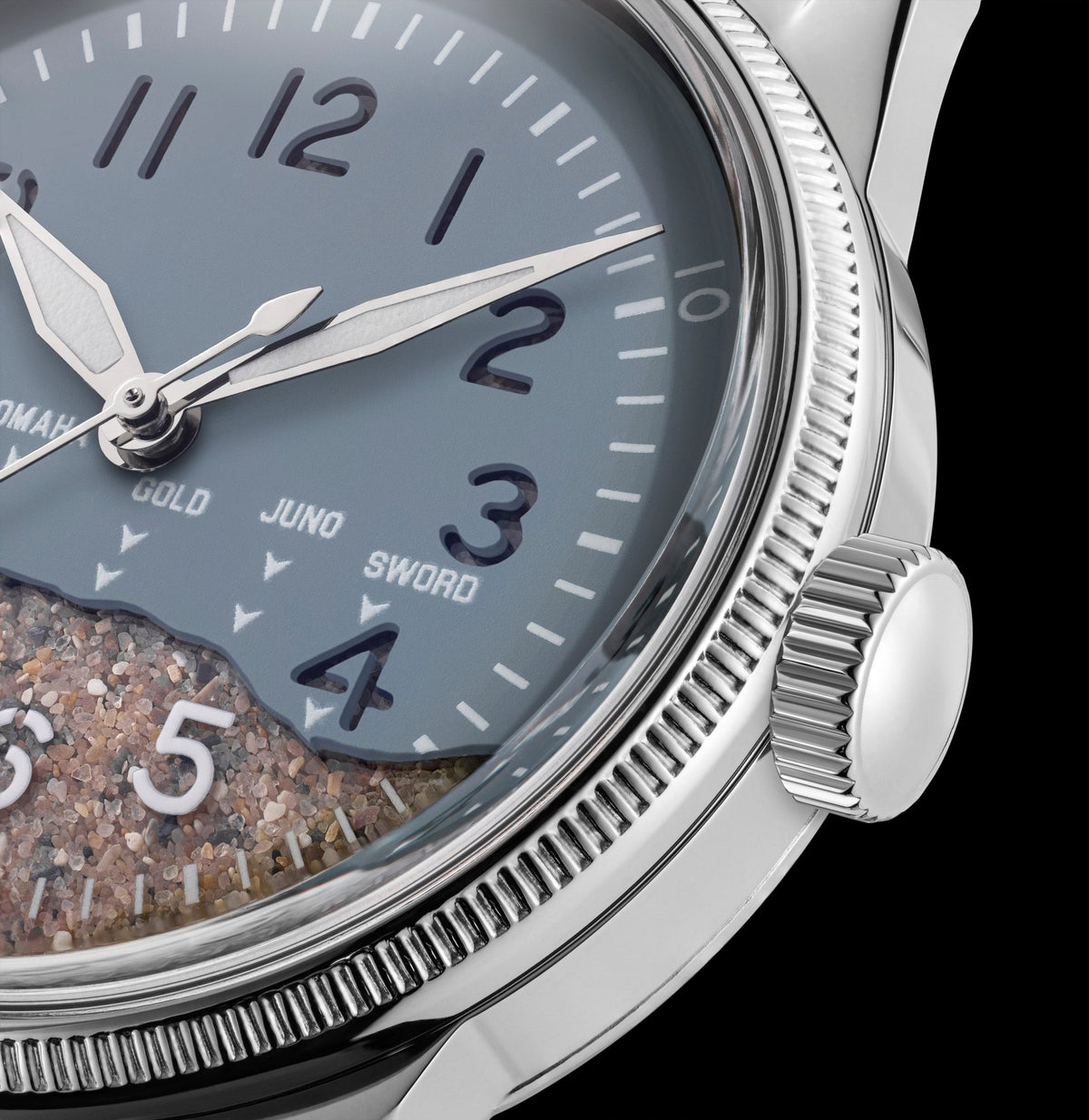
The hour markers carry that layered construction further. Cutout numerals in the upper dial contrast with printed markers over the sand-colored lower section. This is the detail we would spend time looking at: the beach material is part of the display you use every day.
Our Utah Beach owner guide takes a closer look at the original collection’s dial materials. The Higgins Blue watch was created in partnership with the Utah Beach Landing Museum, with a portion of proceeds supporting the museum. Turn it over and there is a numbered caseback with a stylized D-Day scene. It is a contemporary commemoration, with its own design and materials.

Choose the Higgins Blue on Sand Leather, or explore the Beige NATO and Bonklip bracelet options. Pick the strap around how you like a watch to look and feel. If the original service-watch layout interests you more, the A-11 Type 44 Patina on green canvas offers a different route into the period. Our D-Day watch history explains the timepieces behind that story.
Frequently asked questions
What does LCVP stand for?
LCVP stands for Landing Craft, Vehicle, Personnel. It identifies a landing craft designed to bring troops, vehicles or supplies ashore. The WWII American LCVP is commonly called the Higgins boat after Andrew Jackson Higgins, whose New Orleans boatbuilding business developed the design.
How many soldiers could a Higgins boat carry?
The U.S. Navy museum gives a general capacity of about 36 servicemen, in addition to a four-man crew. Loads varied with the mission. At Utah Beach on D-Day, the first wave's 20 LCVPs each carried a 30-man assault team, according to the Army's official history.
Were Higgins boats used at Utah Beach?
Yes. LCVPs carried the first assault wave at Utah Beach on June 6, 1944, and more followed with troops and engineers. Larger landing craft had other jobs, including bringing in tanks. The invasion used several types of craft, each with a different carrying role.
What connects Higgins Blue to D-Day?
The Praesidus A-11 Utah Beach Sand MK2 Higgins Blue commemorates the Normandy landings through its name, Utah Beach sand and coastline-shaped dial. It was created in partnership with the Utah Beach Landing Museum. The watch is a modern design for wearing that connection to the place.

Leave a comment
This site is protected by hCaptcha and the hCaptcha Privacy Policy and Terms of Service apply.