

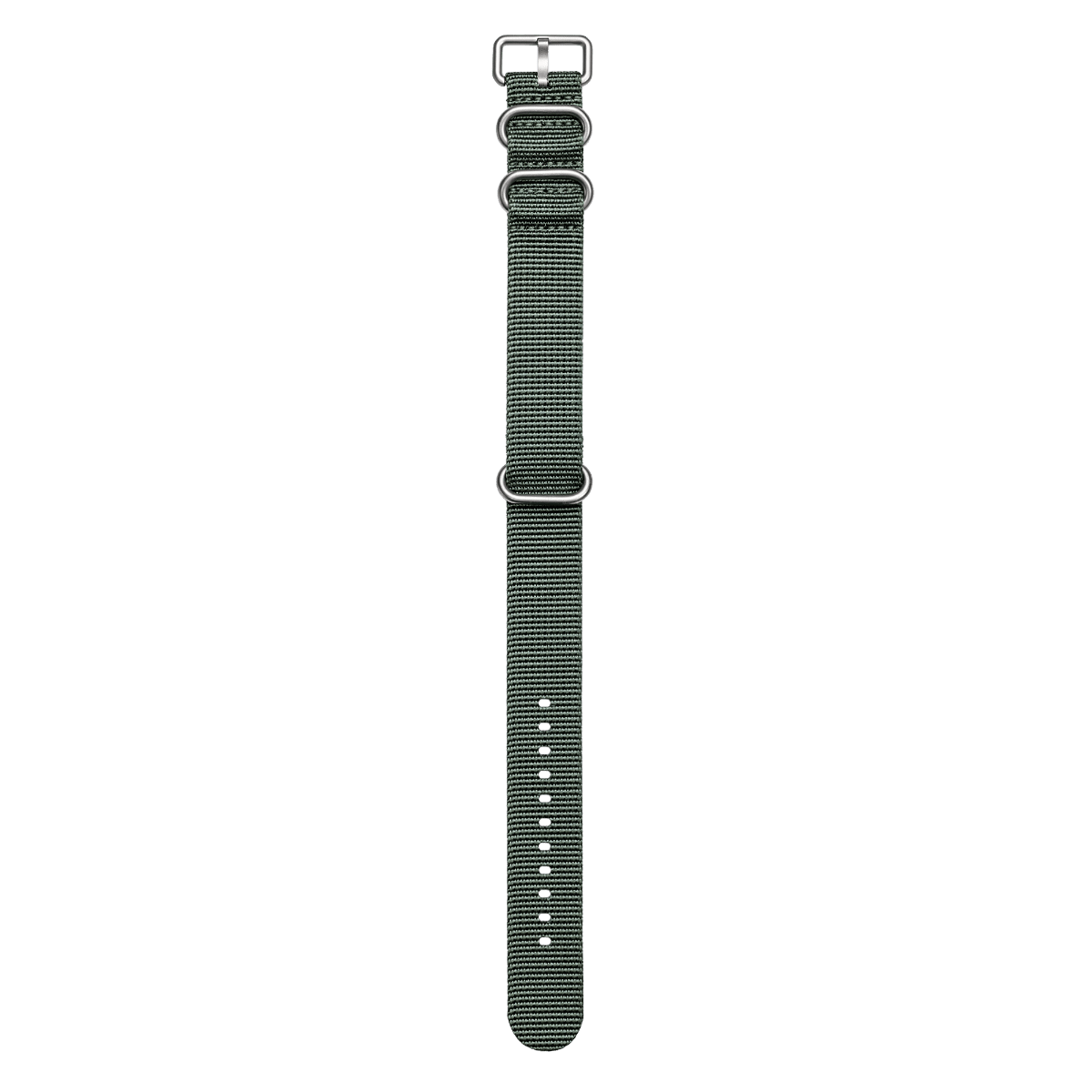
A NATO strap is one of the simplest ways to change how a watch looks and wears. Swap leather for pass-through nylon and the case sits differently, the strap folds differently, and the whole watch takes on a more casual appearance. Our NATO and nylon strap collection includes several options, but choosing one starts with understanding the construction.
A traditional NATO uses a long strap that passes behind the watch, plus a shorter retaining section underneath. That layout comes from British military equipment and remains useful today: it is easy to remove, and the continuous strap can keep the watch attached if one spring bar comes loose. Width and clearance determine whether it will fit your watch; the number of fabric layers determines how high it sits.
What Makes a NATO Strap Different?
Lay the strap flat and the arrangement is easy to follow. There is a long strip with a buckle at one end and adjustment holes toward the other. Attached near the buckle is a shorter strip ending in a metal loop. The long strip passes behind the watch and through that loop, placing the shorter section underneath it.
The shorter section helps keep the watch head in position when you take it off. Beneath the caseback, the two fabric layers also lift the watch slightly away from your wrist. That is the main difference you will feel when moving from a conventional leather strap.
Once the strap is fitted, you can normally slide it out again without removing the spring bars. That makes changing colors or taking it off to wash fairly quick.
Why is it called a NATO strap?
The name comes from the NATO Stock Number used to identify the strap in the military supply system. NATO's own history of the strap also explains the G10 nickname: it refers to the G1098 form used to obtain equipment.
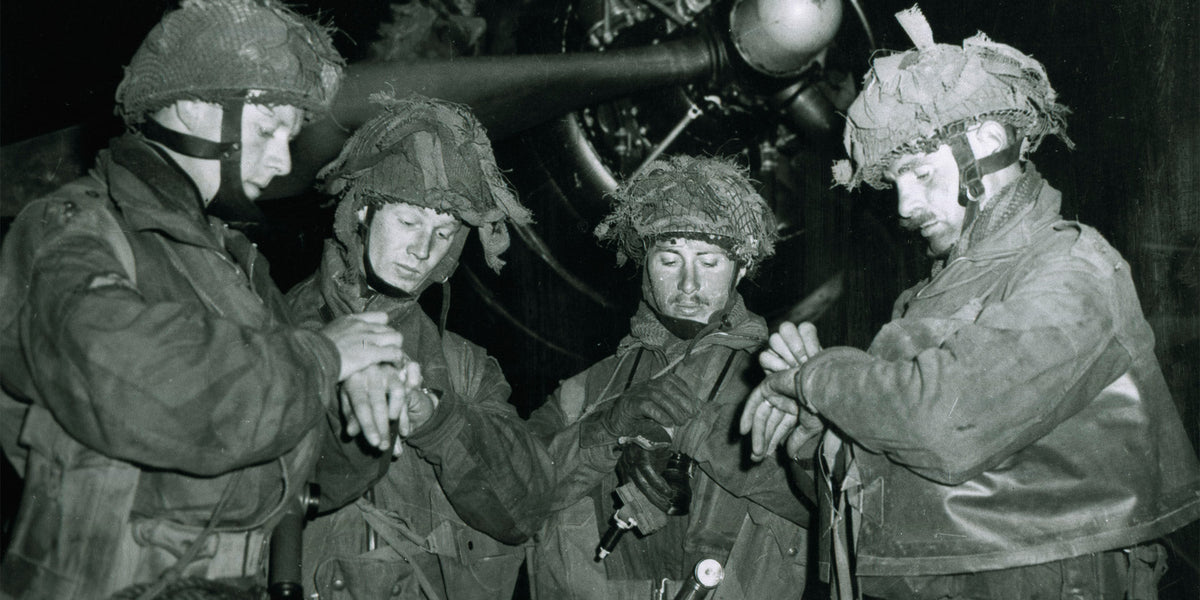
The familiar British Ministry of Defence design dates to 1973. It was gray nylon, 20mm wide, with a long pass-through section and metal hardware. The later Ministry of Defence standard records that predecessor and shows the strap's construction.
Today the name covers many colors and widths. A modern NATO-style strap follows that familiar layout; the name by itself does not mean a particular strap was issued by an armed force.
NATO, Nylon and Perlon: Which Are You Looking At?
Nylon can be used in several strap designs. A photograph of the whole strap, particularly its underside, often tells you more than a close-up of the weave.
Traditional Double-Pass NATO
Two sections of fabric sit beneath the watch. The shorter one helps position the watch head when the strap is unbuckled. Metal keepers hold the folded tail once you put it on.
Single-Pass Strap
A single-pass strap runs behind the watch once and leaves out the additional retaining section. You still get a continuous length through both sets of lugs, but with one layer under the case. It is worth considering if you like the pass-through layout and want the watch to sit a little lower.
Two-Piece Nylon
A two-piece nylon watch strap attaches separately at each end of the case, much like a leather strap. Our brown Nylon Strap, $50, uses this construction. There is no fabric beneath the caseback, which keeps the profile close to how the watch sits on a conventional two-piece strap.
You may also see the description “two-piece NATO.” That describes the style of a two-piece strap, rather than the traditional pass-through layout. The fitting method follows its construction: each half attaches to its own spring bar.

Perlon
A Perlon strap is recognizable by its open, braided weave. On a traditional Perlon, the buckle pin passes between the woven strands rather than through a row of punched holes. This gives you finer adjustment when your wrist falls between the holes on another strap.
Our Olive Green Perlon, $60, is a one-piece design with a different texture from the flatter woven nylon of a traditional NATO. The weave gives it a lighter appearance than a flat nylon strap, especially beside a small watch case.

Choosing Your NATO Strap Size
Start with the watch’s stated lug width. This is the gap where the strap attaches, not the diameter of the case. A 38mm watch does not take a 38mm strap.
Match the strap width to that gap: 20mm lugs take a 20mm strap. If you cannot find the specification, measure the inside distance between the lugs in millimeters, keeping the ruler straight across. A strap that is too narrow can move sideways; one that is too wide bunches up instead of lying flat.
| Your watch's lug width | Strap width to choose |
|---|---|
| 16mm | 16mm |
| 18mm | 18mm |
| 20mm | 20mm |
| 22mm | 22mm |
These are fitting measurements, not a promise that every strap is offered in all four sizes. Browse our 20mm straps, 16mm straps, or 22mm straps once you have checked your watch.
The sizes in our collection are spread across different products. Brown nylon is offered in 20mm and 22mm, while olive-green Perlon is offered in 16mm and 20mm. Check the individual listing when choosing your size rather than assuming every construction comes in every width.
Check the length around your wrist
Compare your wrist measurement with the strap maker's fit guidance, especially the position of the adjustment holes. The long tail folds back through the keepers after fastening. On a small wrist, a shorter strap can leave you with a neater fold and less fabric beside the buckle.
Can you use a NATO strap on any watch?
A pass-through strap needs room between the case and the bars. Even with the right lug width, a thick weave may not slide through that gap. If it needs force, choose a thinner strap or check the fit with a watchmaker.
Ordinary removable spring bars work on compatible watches. Permanently fixed bars can work too, provided there is enough space to thread the strap. Integrated attachments may need a strap made specifically for that case. Before fitting, check that removable bars are straight and both tips seat securely in the lugs.
How to Wear a NATO Strap
These steps are for a traditional double-pass NATO. Work over a soft surface so the watch is protected while you handle it.
- Prepare the watch. Remove the existing strap or bracelet, then fit the correct spring bars securely between the lugs. For a watch with fixed bars, leave them in place. If you’re unfamiliar with a spring-bar tool, a watchmaker can handle the initial strap removal.
- Open the NATO fully. Pull the long tail out of the metal loop on the shorter retaining section. You should now have a free long strip to thread through the watch.
- Feed it behind the case. With the dial facing up and 12 o’clock at the top, feed the tail down through the gap between the upper spring bar and the case. Run it flat across the caseback, then bring it up through the gap at the lower spring bar. Keep the buckle above the watch.
- Thread the retaining loop. Slide the watch toward the buckle end, then pass the long tail through the loop at the end of the shorter section. The watch should sit between the upper keeper and this lower loop, with the fabric lying flat underneath.
- Fasten and tuck. Put the watch on, buckle it at a comfortable hole and pass the tail through the keepers beside the buckle. Fold any remaining length back and tuck it through a keeper so it stays out of the way.
Before you head out, give the strap a gentle pull to check the attachment. The watch should stay in place without the strap pinching your wrist. Bend your hand back, too. A fit that feels fine with your arm resting on a table can feel too tight once you start moving.
Two Watches to Pair With a 20mm Strap
Our 38mm A-11 Type 44 Patina brings WWII A-11 styling into a modern hand-wound watch and uses 20mm lugs. Green canvas suits that vintage appearance. Brown two-piece nylon gives you a similar attachment layout in a different color, while olive-green Perlon adds its open weave and finer buckle adjustment. Our Type 44 origin story explains how the watch developed.
The A-5 UDT Black on Tropic rubber takes its crown-cap design from the naval BUSHIPS watches and also has 20mm lugs. The cap gives the case a substantial profile. A single-pass strap keeps the added fabric beneath it to one layer. For the background to that case design, read our BUSHIPS watch story.
Both watches are linked on their supplied straps. Nylon and Perlon alternatives are purchased separately.
Keeping a Nylon Strap Clean
A fabric strap spends a lot of time against your skin, so sweat and dust gradually work their way into the weave. Remove the strap from the watch before washing it. For an unlined nylon strap, gentle hand washing with mild soap and lukewarm water, followed by a thorough rinse, is a sensible starting point. Follow any care instructions supplied with the particular strap.
Let it air-dry fully before putting it back on. Avoid bleach, strong cleaners and direct heat. Leather-lined or mixed-material straps need their own care approach. While the strap is off, look over the holes, stitching and hardware; damaged attachment points are a reason to replace it.
Wash the strap separately from the watch head. For swimming, follow the care guidance for your model; changing the strap does not change the case’s water-resistance rating.
NATO Strap FAQ
Why is it called a NATO strap?
The name comes from the NATO Stock Number used to identify the strap in the supply system. G10 is a separate nickname associated with the G1098 equipment form. Modern NATO-style straps use the familiar pass-through construction in many widths and colors, without necessarily being military-issued equipment.
Should a NATO strap fit snugly?
It should hold the watch securely without pinching or leaving you uncomfortable when you bend your wrist. Fasten it, move your hand, and check the fit again. Tuck the excess tail through the keepers. Loosen it if your wrist swells or the fabric begins to dig in.
Can I use a NATO strap on any watch?
You need the right lug width and enough space between the bars and case for the strap to pass through. Secure removable spring bars are suitable on compatible watches; permanently fixed bars are not required. An integrated attachment or a tight gap may call for a different strap.
What size NATO strap do I need?
Match the strap width to the inside distance between the watch's lugs: 20mm lugs take a 20mm strap, for example. Case diameter is a separate measurement. Check thickness and usable length too, particularly if the watch has tight spring-bar clearance or your wrist falls near the strap's adjustment limits.

Leave a comment
This site is protected by hCaptcha and the hCaptcha Privacy Policy and Terms of Service apply.