

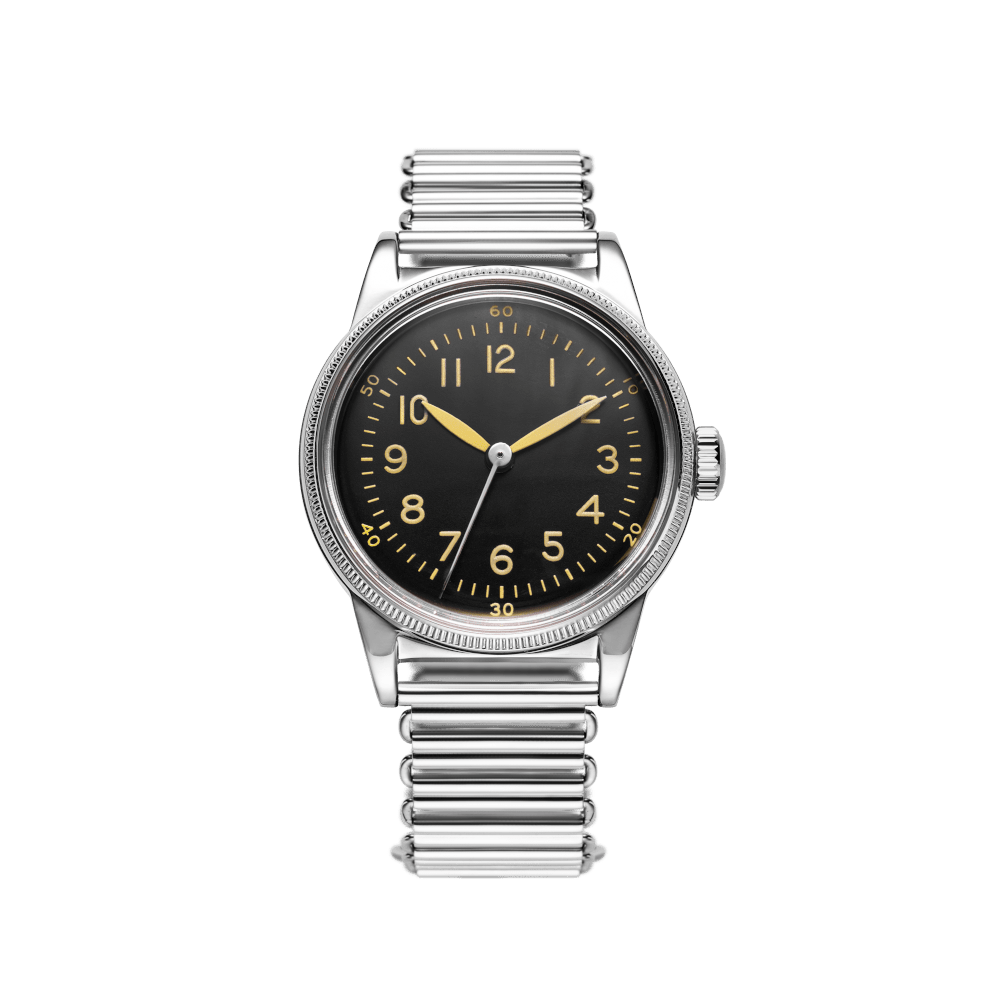
A watch can look exactly right in a product photo and feel completely different once it's on your wrist. Often, the problem isn't that you chose a bad watch. You just bought a diameter without knowing how the rest of the case would fit.
If you're choosing between 34, 36, 38 and 40mm, start with the look you actually want. Smaller cases leave more wrist visible; larger ones give the dial more presence. Our 38mm field watches sit between those two approaches, but 38mm isn't a universal answer. Your wrist shape, the length of the lugs and even the strap can change the result.
First, measure your wrist properly
Wrap a flexible measuring tape around the spot where you normally wear a watch, just behind the wrist bone. Keep it against the skin without pulling it tight. No tape? A strip of paper works: mark the overlap, lay it flat and measure it with a ruler.
Write down the measurement in centimeters or inches. Then look at your wrist from above. Is the top fairly flat, or does it curve away quickly at the sides? Two people can have the same wrist circumference and very different amounts of space for a watch to sit on.
If you already own a watch you like wearing, that's a better reference than any chart. Note its diameter, its lug-to-lug length and what you'd change. Perhaps the dial looks good but the case catches your cuff. Perhaps it feels comfortable, but you wish it looked a little smaller. Those are useful answers when you're choosing the next one.
A wrist measurement table to get you started
Use this as a shortlist for trying watches, not a rule about what you're allowed to wear. The overlapping ranges are deliberate. These are our starting suggestions for round watches, not a fit standard or a guarantee.
| Wrist circumference | Case sizes to compare first | What to look for |
|---|---|---|
| Under 15cm / about 5.9in | 34 and 36mm | Short lugs and a strap that can adjust small enough |
| 15–17cm / about 5.9–6.7in | 34, 36 and 38mm | Whether you prefer a compact look or more dial presence |
| 17–19cm / about 6.7–7.5in | 36, 38 and 40mm | Case length and thickness, rather than diameter alone |
| Over 19cm / about 7.5in | 38 and 40mm, or smaller if you prefer | Enough strap length and the amount of wrist you want visible |
A large wrist doesn't make a 34mm watch wrong. Equally, a smaller wrist doesn't automatically rule out 40mm. Try the size that interests you, then check how the whole watch sits.
Why smaller watches feel familiar
34 and 36mm aren't just sizes for smaller wrists. They're also closer to the proportions of many mid-century watches. IWC's Mark 11 pilot's watch, introduced in 1948, measured 36mm. If you're drawn to that period, a smaller case can be part of getting the feel right, rather than a compromise on size.
By the 2000s and 2010s, tastes had shifted toward larger sports watches, with cases of 45mm and more finding an audience. More recently, smaller cases have come back into favor as collectors revisit vintage watches and brands offer more compact designs. That shift is still visible in 2026, although it hasn't made larger watches disappear.
For a vintage-inspired watch, 34 or 36mm can therefore be a more historically faithful choice than 40mm, depending on the original. Start with the period and design you like, then decide how closely you want to follow those proportions on your own wrist.
What 34, 36, 38 and 40mm actually change
Case diameter is the width of the case, usually measured without the crown. It's the quickest way to narrow a search, but it tells you less than a wrist photo might suggest. A wide bezel leaves less space for the dial; a narrow bezel makes the face look more open. Two watches with the same diameter can look surprisingly different.
34mm: deliberately compact
A 34mm case gives you a lot of visible strap and wrist around the watch. It's worth considering if you like the proportions of older field watches, prefer something unobtrusive or simply don't want a watch to dominate your wrist.
Check readability rather than assuming smaller means harder to read. Dial contrast, hand shape and the size of the numerals matter too. A clear 34mm dial can be easier to use than a larger, busier one.
36mm: small without feeling tiny
36mm is a sensible size to try when 34mm feels a little too compact but you don't want the broader footprint of a 38 or 40mm watch. That two-millimeter step can be noticeable on the wrist, especially with an open dial.
Don't dismiss it because you're used to larger watches. Give yourself a little time to look at it normally, with your arm down, rather than judging it only in a close-up phone photo.
38mm: a useful place to start
For someone buying a field watch online without a firm size preference, 38mm is a useful comparison point. It gives the dial room while still leaving scope for a compact overall case.
The catch is that a 38mm watch can have short, curved lugs or longer, straighter ones. The number on the product page is the start of the fit question, not the end of it.
40mm: more presence, with a closer look at the lugs
Choose 40mm because you like how it looks, not because you think a watch has to reach a certain diameter. It can give a dial more presence and suit someone who finds smaller watches visually lost on their wrist.
Pay attention to the case length before buying. A well-proportioned 40mm watch may sit neatly; another can reach beyond the flat part of your wrist even though the difference in diameter seems small.
Lug-to-lug is the measurement people miss
The lugs are the extensions of the case that hold the strap. Lug-to-lug measures the watch from the outer tip of one pair to the outer tip of the opposite pair, along the 12-to-6 direction. It tells you how much wrist the case needs from top to bottom.
As a practical fit check, look for the lugs to stay over the top of your wrist rather than projecting past its edges. Curved lugs can follow the wrist more closely. A bracelet with fixed end links can extend the watch's effective footprint beyond the case itself, so check those too.
Lug width is a different measurement: it's the gap where the strap fits. It tells you which replacement strap to buy, not how long the watch is.
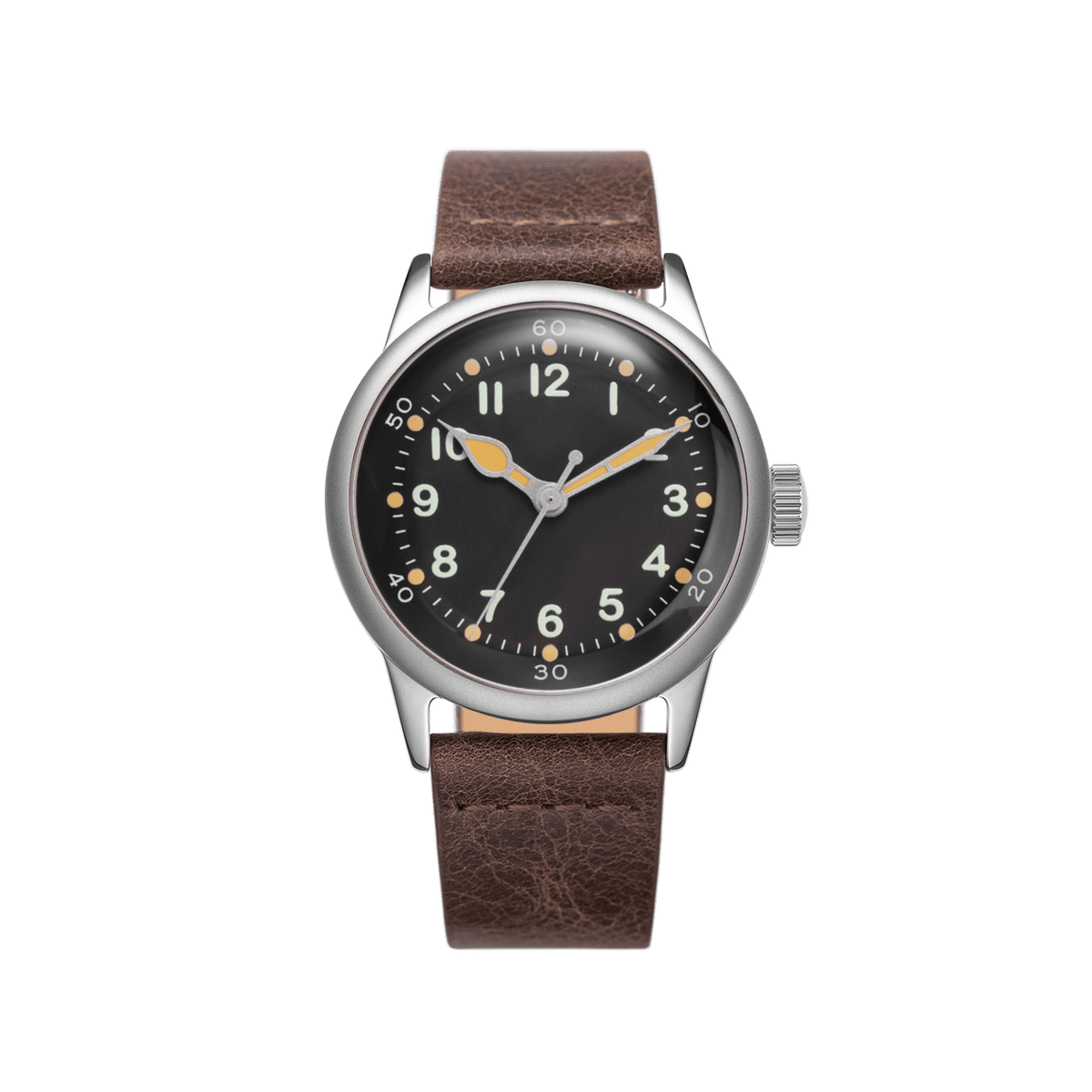
Our Jungle Field Automatic 38 in Black Texture is a useful concrete example. It takes the clear field-watch layout of the Jungle Field into a larger automatic version. Its case is 38mm across, 46mm lug-to-lug and 10.20mm thick. Those three measurements give you a much better idea of its footprint than “38mm” alone.

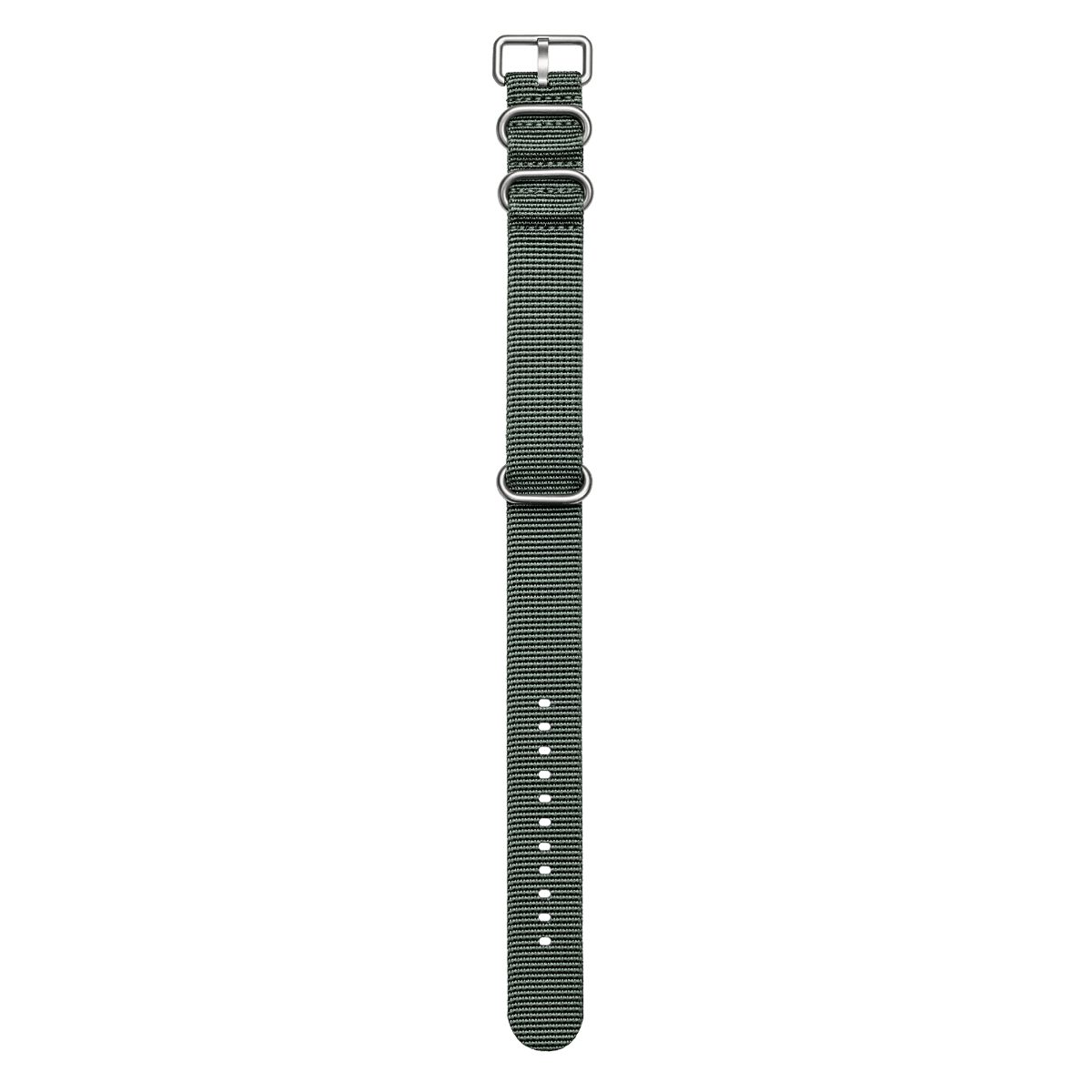
The Jungle Field Automatic 38: 38mm across, 46mm lug-to-lug and 10.20mm thick. Shown on green canvas.
Thickness and the strap finish the fit
If you wear buttoned cuffs, check case thickness as well as diameter. A taller case can catch a sleeve even when its width feels right. Look at side photographs and notice whether the crystal rises above the case or the caseback adds height underneath.
A strap changes how the watch settles on your wrist. Stiff leather may hold the case differently from soft canvas. A pass-through strap adds material beneath it, while a broad backing can make the whole setup look larger. Bracelet adjustment matters too: a good case size won't feel right if the bracelet is either pinching or sliding around.
Before buying, check the strap's stated wrist range where one is provided. Wrist circumference is particularly useful here. A case may suit you perfectly while the supplied strap is too long or too short.
For a closer look at how a leather backing changes a watch's proportions, read our Bund strap guide, including what to check around the case and under a shirt cuff.
Why we don't make every watch the same size
The Type 44 is our take on the A-11 field watches of World War II. We originally planned a 38mm version. Then we bought a 1944 Waltham A-11 and decided to get closer to the original's proportions. That led us to develop a 32mm version as well. The Type 44 origin story explains that decision in more detail.
That doesn't mean everyone should wear 32mm. It means the size was part of what we wanted the watch to feel like, rather than a number chosen in isolation. The A-11 Type 44 Patina in 38mm offers the same design direction with a larger presence. If you like the character of an older A-11 but prefer more watch on your wrist, that's the version to compare first.
The Rec Spec OG Sunray on Tropic Rubber takes a different approach within the same 38mm diameter. Its crown is tucked into the case at 4 o'clock, and the gray sunray dial gives it a different face from the Jungle Field. If a crown pressing against the back of your hand bothers you, crown position is worth checking alongside the case measurements.

The Rec Spec OG Sunray places its crown at 4 o'clock, tucked into the case.
You don't have to decide on a size before you decide what kind of watch you like. Find the design that interests you, compare its measurements with a watch you know, and check whether its proportions make sense for your wrist.
Before you order
Take one last look at the watch from the side and on a wrist, not just straight on against a plain background. Check the stated diameter, lug-to-lug and thickness. Confirm the strap size. If a measurement is missing, ask before you buy rather than estimating it from a photograph.
Then choose the look you want to live with. If you're still between a compact watch and something larger, start by comparing the cases in our 38mm field watch collection against your current watch's measurements.
Watch size FAQs
What size watch should I get for my wrist?
Measure your wrist circumference, then compare case diameter, lug-to-lug length and thickness with a watch you already find comfortable. A sizing chart can suggest a starting range, but wrist shape and personal taste matter. Check that the lugs sit over your wrist and the strap adjusts properly.
Is a 38mm watch too small for a man?
No. A 38mm watch can be a comfortable, balanced choice regardless of gender. Whether it looks small depends on your wrist, the dial opening and the case shape. If you prefer more visible wrist around the watch, a smaller diameter may be exactly what you're looking for.
Can I wear a 40mm watch on a small wrist?
Possibly. Check the lug-to-lug measurement and the shape of the lugs before deciding. A 40mm case with short, downward-curving lugs may fit better than a smaller case with long, straight ones. Make sure the case doesn't overhang your wrist and the strap can be adjusted comfortably.
Is lug-to-lug the same as lug width?
No. Lug-to-lug is the overall length from the outer tips of the upper lugs to the outer tips of the lower lugs. Lug width is the gap between the lugs where the strap attaches. The first helps you judge case fit; the second helps you choose a compatible strap.

Leave a comment
This site is protected by hCaptcha and the hCaptcha Privacy Policy and Terms of Service apply.