

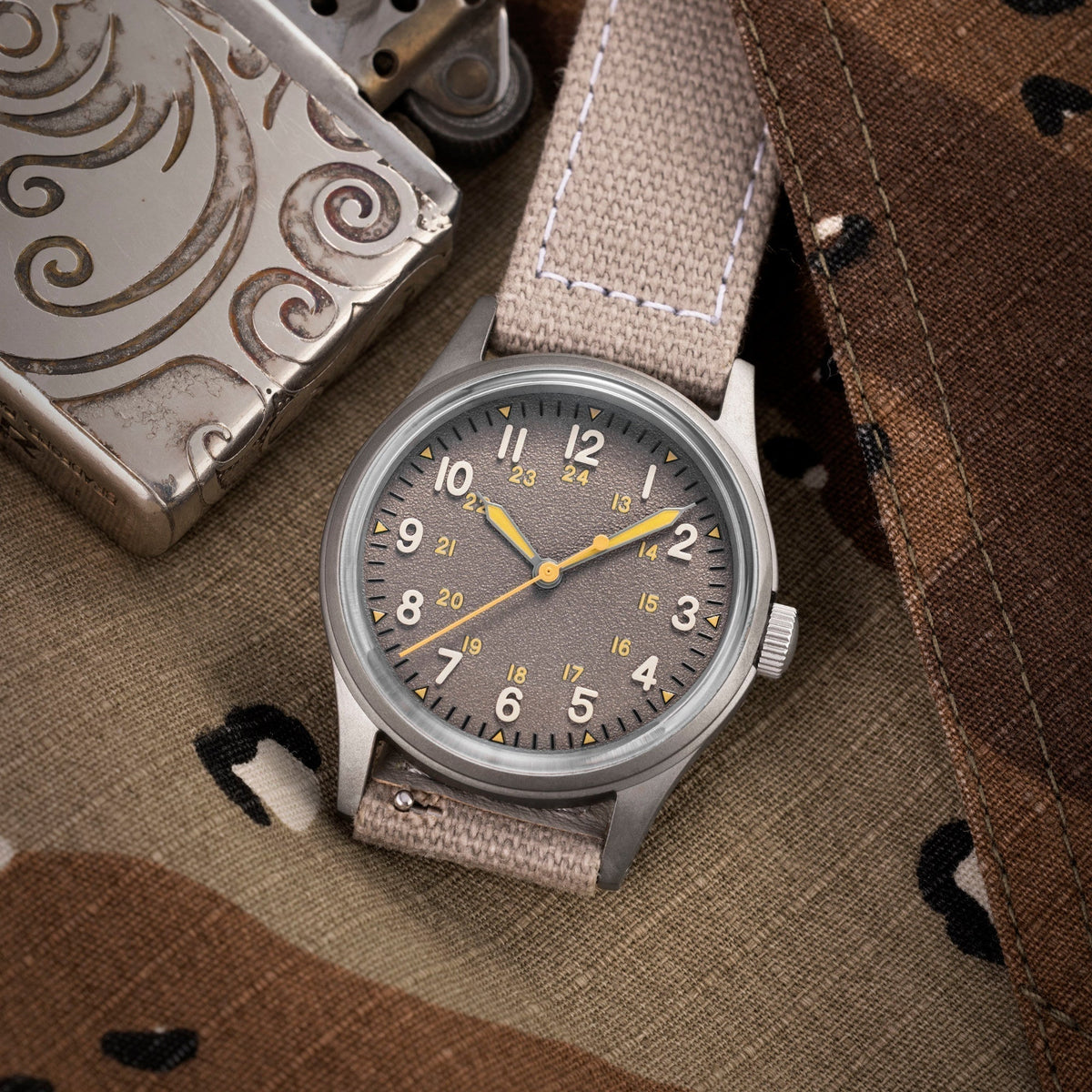
The choice between a field watch vs dive watch defines your relationship with time itself. This field watch vs dive watch comparison explores two legendary timepiece categories. These aren't mere accessories: they're instruments forged in the crucible of military necessity, each born from life-or-death missions where precision meant survival.
At Praesidus, we understand this heritage. Every timepiece we craft honors the legacy of military timekeeping while meeting modern demands. But which type of watch serves your mission best?

Why Military Heritage Shapes Every Tick
The field watch vs dive watch debate matters because these timepieces emerged from different battlefields with distinct purposes. This field watch vs dive watch analysis reveals why each type excels in specific situations.
Field watch and dive watch designs weren't created in boardrooms: they were born in trenches, submarines, and special operations units where failure wasn't an option. The DNA of military necessity runs through every component, from dial legibility to rugged construction.
Military professionals demanded timepieces that could withstand punishment while delivering absolute accuracy. This requirement created two distinct evolutionary paths: the field watch optimized for terrestrial combat and the dive watch engineered for underwater warfare.

Historical Origins: Forged in Combat
Field Watch Heritage and the Dirty Dozen
Military field watches put a practical task first: making the time easy to read on the wrist. Clear numerals, contrasting dials and straightforward layouts helped establish a design language that remains useful today.
The British W.W.W. watches known as the Dirty Dozen were supplied by twelve manufacturers to a common military specification. The name refers to those makers and their watches, not to twelve different specifications.
For a modern field watch, look at how that emphasis on legibility translates to your own use. Dial contrast, case proportions and strap comfort matter more than a military-inspired label alone.
Dive Watch Evolution: Reading Time Underwater
Underwater use places different demands on a watch. Water resistance, a legible display and a way to track elapsed time became central features of purpose-built diving watches.
The Rolex Submariner, introduced in 1953, is one postwar example in that history. At launch, it was rated to 100 meters of water resistance, reflecting the growing demands of underwater exploration.
When choosing a watch for use in water today, follow the manufacturer’s guidance for the specific model. A rotating bezel or a dive-inspired appearance does not, on its own, establish suitability for diving.

Key Features: Engineering for Different Missions
Field Watch Specifications
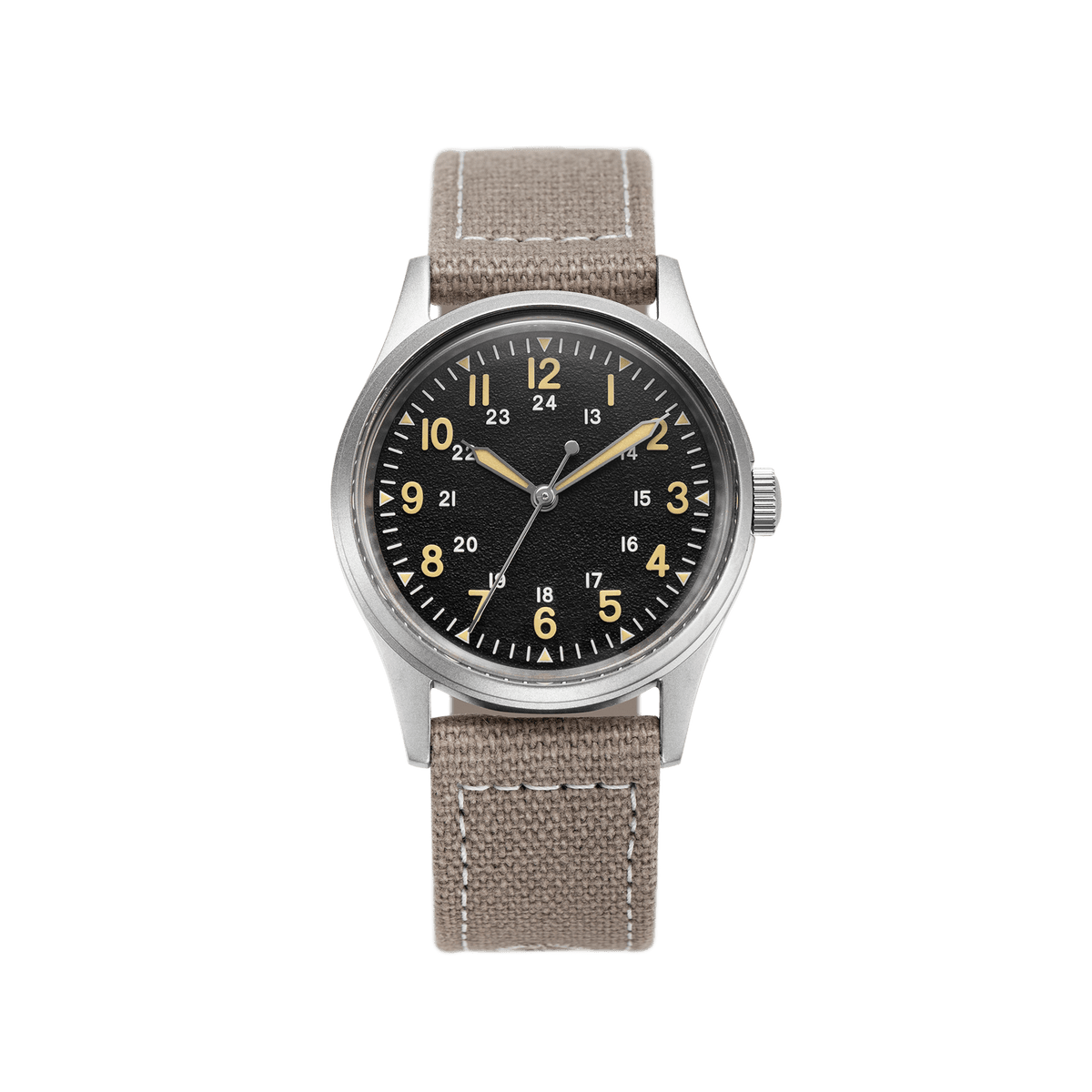
Dial Design and Legibility The field watch prioritizes instant readability. Clean dial layouts with large numeral markers ensure easy-to-read functionality in any lighting condition. Strong lume application provides visibility during nighttime operations. Most feature a simple 24 hour time display option for military coordination.
Construction and Durability
Field watches are often chosen for comfortable everyday wear. Case size, weight and water resistance vary by model. Check the manufacturer’s instructions before exposing a watch to water, and remember that the strap may have different care requirements from the case.
Versatility and Comfort The field watch excels as an everyday wear option. Whether paired with nylon straps for outdoor activities or dressed up for civilian life, these timepieces adapt to any environment. Their understated design makes them ideal for both sports watch applications and professional settings.
Dive Watch Engineering
Water Resistance and Intended Use
Look for a model explicitly described by its manufacturer as suitable for your intended water activity. A depth rating is only part of that assessment. Follow the instructions for crown operation, inspection and servicing.
Elapsed-Time Bezel
Many diving watches use a rotating bezel to display elapsed time. Check the watch’s instructions to understand its operation and limitations. The presence of a bezel alone does not make a watch suitable for diving.
Legibility
A diving watch needs a display that remains readable in its intended conditions. Hands, markers and the elapsed-time indicator should be easy to distinguish. Assess the complete watch rather than relying on a single feature or a military-inspired name.

Technical Specifications: Quartz vs Mechanical
Movement Considerations
Quartz and Mechanical Movements
Quartz, automatic and manual-wind watches offer different ownership experiences. A quartz movement is a practical option when convenience is the priority. An automatic winds through wrist movement, while a manual-wind watch makes winding part of the daily routine. For accuracy, shock resistance and maintenance, compare the specifications of the actual movement and finished watch rather than relying on the movement category alone.
Chronograph Complications Many field watches and dive watches incorporate chronograph functions for precise timing. These complications add versatility for measuring elapsed time during various operations. However, they also increase complexity and potential failure points.
Crystal Choice
Compare the crystal as part of the whole watch. Sapphire, mineral glass, sapphire-coated mineral glass and acrylic are different constructions. The Praesidus Type 44 uses acrylic to stay close to the original A-11 design. Check the specification for the model you are considering and choose the material that suits how you intend to wear it.
Modern Applications: Beyond Original Intent
Daily Wear and Lifestyle Integration
Today's field watch vs dive watch choice often comes down to lifestyle compatibility. When considering field watch vs dive watch options, functionality determines the best selection for your needs. Field watches excel for everyday wear, offering versatility that transitions from outdoor adventures to office environments. Their understated design makes them excellent dress watch alternatives for casual professional settings.
Dive watches appeal to those seeking a sportier aesthetic. Even non-divers appreciate the robust construction and technical features. Many enthusiasts practice "desk diving": using the timing bezel for daily tasks like parking meters or cooking rather than actual underwater activities.
Choosing What You Will Actually Wear
Start with your routine. For office days, travel and walks, prioritize a readable dial, comfortable case and a strap you enjoy wearing. If water activities are part of the plan, check the model’s stated water resistance and permitted uses before buying.
Within the Praesidus range, the A-11 Type 44 is an option for someone drawn to WWII field-watch proportions and manual winding. Compare it with the other collections by size, movement and intended use, rather than assuming a higher price means a better fit.
You do not need one watch from every category. Choose the watch that suits your activities first, and add another only when it serves a different purpose.

Choosing Your Mission-Critical Timepiece
The field watch vs dive watch decision ultimately depends on your primary activities and aesthetic preferences. This field watch vs dive watch guide demonstrates that both serve distinct purposes in the modern world. Field watch designs excel for terrestrial adventures, daily wear, and situations requiring understated eligibility. Their lightweight, comfortable construction makes them ideal for activities like hiking or everyday professional use.
Dive watches suit those needing maximum water resistance, timing functions, or preferring a bulkier, more technical appearance. Even if you never plan serious diving, the robust construction and sportier aesthetic appeal to many enthusiasts.
Consider your wrist size, activity level, and style preferences. Smaller wrists may favor field watch proportions, while those seeking a statement piece might prefer the presence of a quality dive watch.

The Praesidus Difference: Where Heritage Meets Innovation
At Praesidus, we craft timepieces that honor military heritage while serving modern needs. Our field watches capture the essential DNA of the dirty dozen era with contemporary reliability. Our dive watches blend vintage military diving aesthetics with modern water resistance and timing precision.
Whether you choose a field watch for its versatile eligibility or a dive watch for its technical prowess, you're selecting more than a timepiece: you're choosing a legacy. Every Praesidus watch connects you to the heritage of military timekeeping while delivering the performance demanded by today's adventures.
The field watch vs dive watch choice defines your relationship with time itself. Choose wisely, and your timepiece becomes more than an accessory: it becomes your trusted companion for whatever mission lies ahead.


Leave a comment
This site is protected by hCaptcha and the hCaptcha Privacy Policy and Terms of Service apply.