

Easy Company officer Dick Winters landed in Normandy without the equipment he had packed for the fight. In a later letter to Stephen Ambrose, he recalled his knee bag tearing away from his parachute harness, taking his weapons, ammunition, extra clothing and food with it. Before he could lead men into combat, he needed to find something to fight with.
Behind the familiar faces from Band of Brothers were men whose plans depended on equipment surviving the jump and reaching the ground with them. Their wider airborne story is also part of the history we explore through our Praesidus D-Day collection.
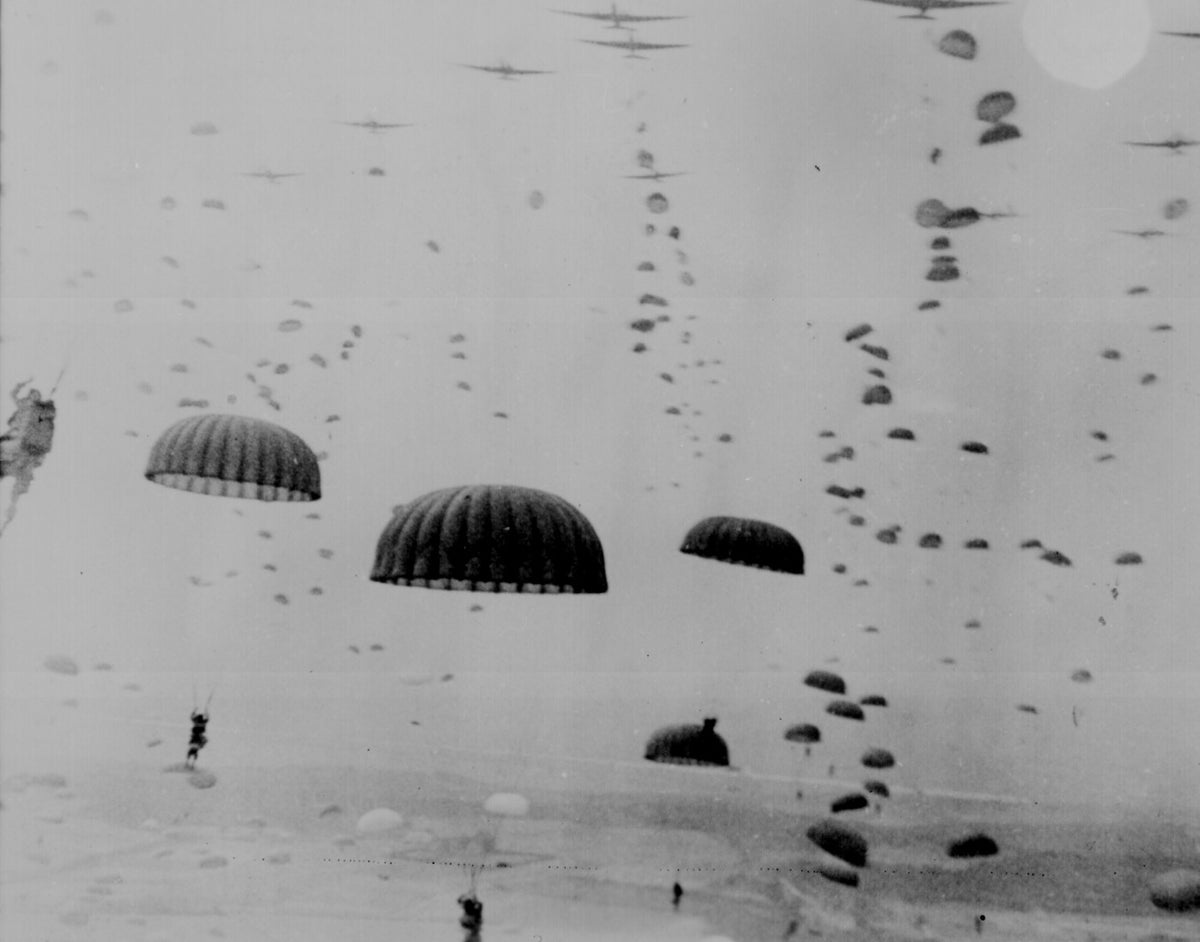
Allied airborne landings in the Netherlands, September 1944. This photograph shows the wider operation, not an identified Easy Company group. U.S. National Archives, 111-SC-354702; NAID 531392.
Who was Easy Company?
Easy Company was E Company, 2nd Battalion, 506th Parachute Infantry Regiment, within the US Army's 101st Airborne Division during World War II. The company trained at Camp Toccoa, Georgia, in 1942 before preparing in England for the invasion of occupied France.
The men parachuted into Normandy on June 6, 1944. Later that day, Winters led an attack on the German artillery position at Brécourt Manor. Their campaign continued through the Netherlands during Operation Market Garden in September, then the fighting around Bastogne during the Battle of the Bulge that winter.
Stephen Ambrose's book and the 2001 television miniseries Band of Brothers brought their experiences to a much wider audience. The equipment is worth looking at alongside that familiar story, because it shows what getting through a day actually required.
The gear had to arrive before it could help
Winters's account is blunt about the consequences of losing his load. He recovered a weapon and ammunition from a dead paratrooper and relied on fellow soldiers for food. A carefully packed set of equipment had become a problem to solve on the ground.
Easy Company veteran Edward Tipper remembered the other side of that problem: the weight. In his oral history for The National WWII Museum, he recalled carrying about 100 pounds of equipment and supplies, needing help to board the aircraft, and later discarding his gas mask. For him, getting aboard was already a struggle before the aircraft left the ground.
One helmet, more than one job
Private First Class Ed Sabo, an original Easy Company member, left behind a particularly revealing object. His daughter donated his helmet to The National WWII Museum in 2003. It combines a standard M1 steel shell with a parachutist-style liner, rather than being a perfectly matched specialist set.
Those two parts did separate jobs. The steel shell sat over a liner with an adjustable suspension. Parachutist equipment added retention features to help keep the helmet together during the opening shock of a jump.
Sabo's helmet also carried the 506th's spade marking. And it served purposes that had little to do with protecting his head: his daughter recalled him using the steel shell for cooking, shaving and washing socks. The Museum identifies darkened paint on its crown as evidence of cooking over fires.
For a closer look at that two-part construction, read our M1 helmet history.
At Bastogne, the missing comforts mattered
At Bastogne, Winters recalled that the 506th's sector had no buildings for shelter. The men lived in foxholes through the winter fighting. Staying warm became another daily problem alongside finding food. A list of weapons alone doesn't capture what they needed to get through those days.
Where a field watch fits into the wider story
The A-11 offers another way into this wider equipment history: a small, clear-dialed watch built around reading the time quickly. Our connection comes through an original 1944 watch we studied and, separately, a veteran we got to know.
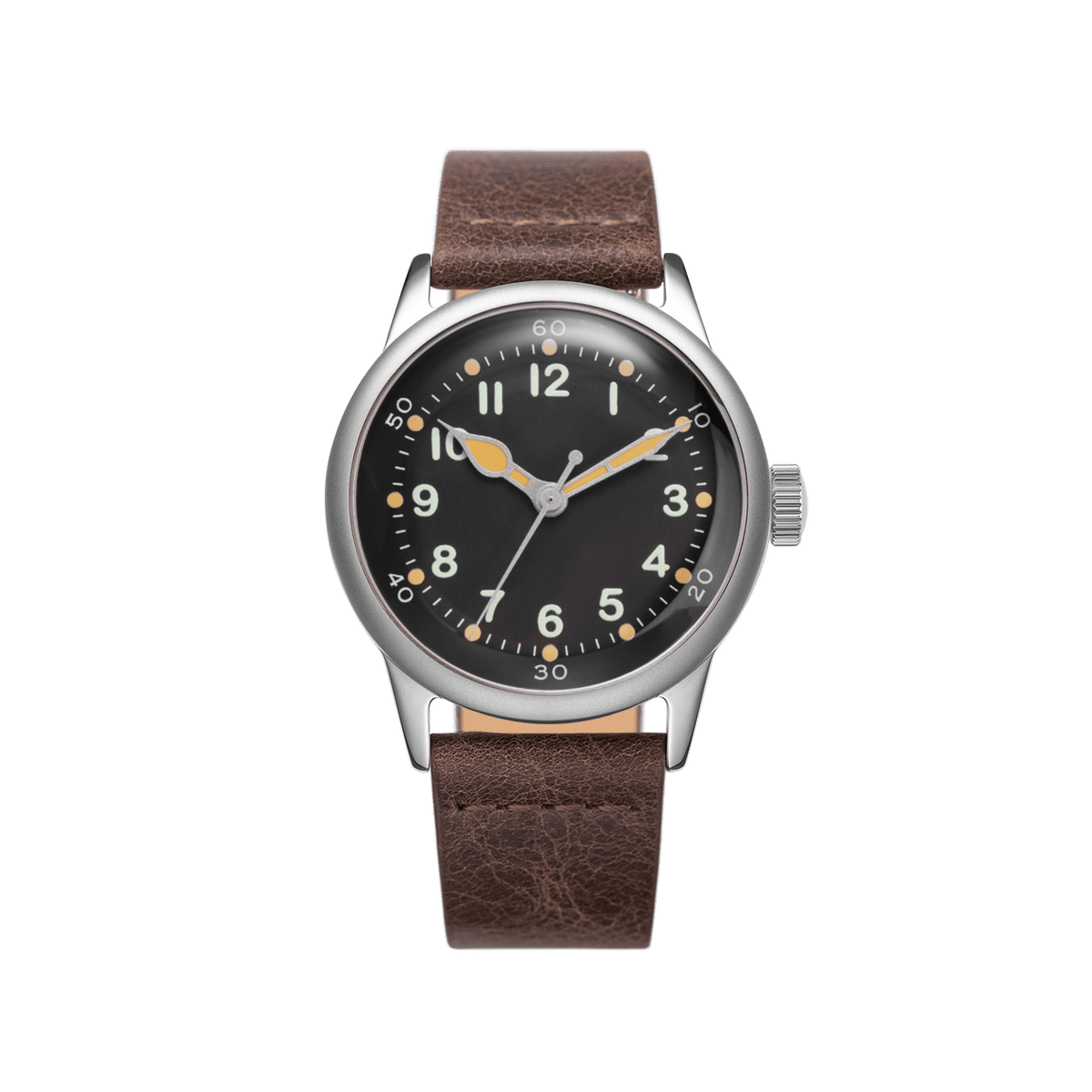
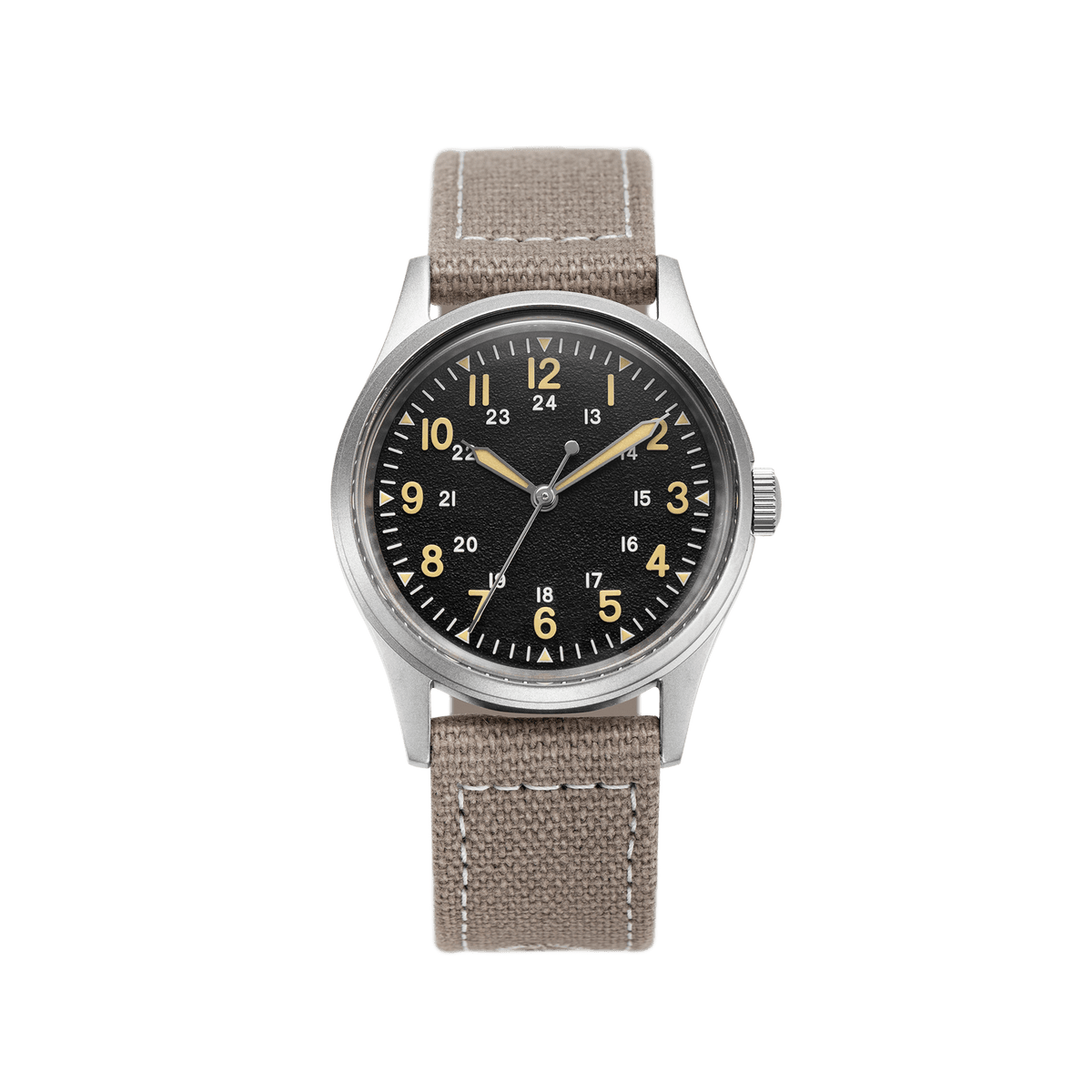
Our A-11 Type 44 Patina grew from studying an original 1944 Waltham A-11. That watch helped us reconsider the proportions of the project and develop a smaller 32mm version alongside the 38mm design. The linked 38mm model keeps the clear dial and hand-wound experience in a size that gives more presence on the wrist. Its current movement is a Swiss-made Landeron L21.

There is also a separate airborne story behind the Tom Rice A-11. Rice served with the 501st Parachute Infantry Regiment, not Easy Company's 506th. His account of losing his watch during the D-Day jump helped start Praesidus. The modern Tom Rice model uses an automatic movement, making it an option for someone who wants that personal story in a watch for regular wear.

If the original design is what interests you, start with the Type 44. If you want to follow the veteran's story that helped begin ours, read about Tom Rice and the beginning of Praesidus.
Easy Company FAQs
Was Easy Company a real unit?
Yes. Easy Company was E Company of the 2nd Battalion, 506th Parachute Infantry Regiment, in the 101st Airborne Division during World War II. The men trained in the United States and fought in Europe. Their experiences later became the subject of Band of Brothers.
What equipment did Easy Company carry?
Their equipment included weapons, ammunition, helmets, clothing and food, but individual loads and what survived combat varied. Dick Winters recalled losing much of his equipment during his Normandy jump. Ed Sabo's surviving helmet provides another documented example, including its steel shell, parachutist liner and 506th marking.
Was Tom Rice part of Easy Company?
No. Tom Rice served in the 501st Parachute Infantry Regiment of the 101st Airborne Division. Easy Company belonged to the 506th. Rice also jumped into Normandy on D-Day, but his service and the story behind the Praesidus Tom Rice watch should not be confused with Easy Company's history.

Leave a comment
This site is protected by hCaptcha and the hCaptcha Privacy Policy and Terms of Service apply.