



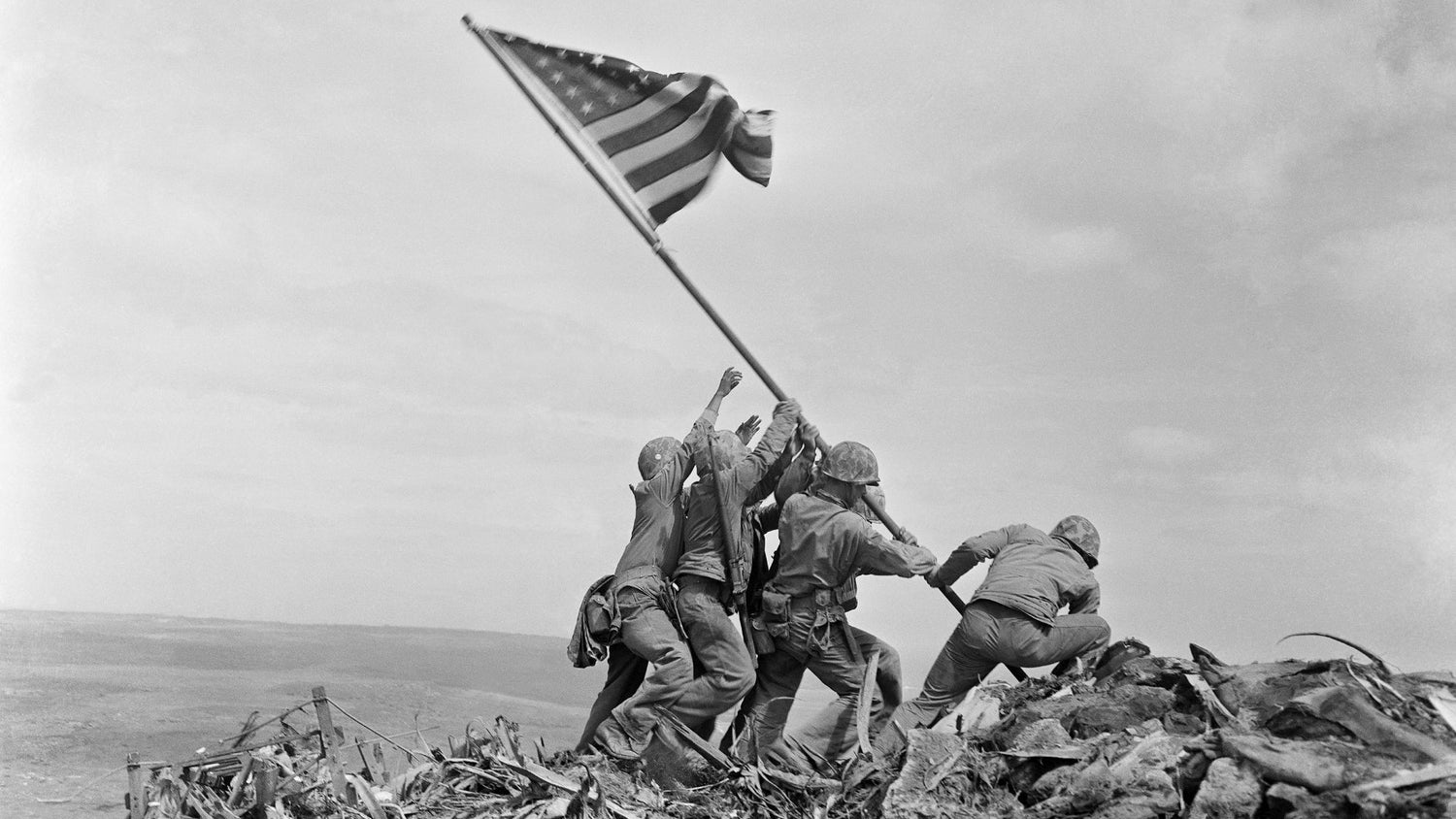
Island Hopping: Time, Steel, and Survival in the Pacific War
The Pacific Ocean is vast in a way that’s hard to comprehend. Endless water, scattered islands, brutal weather, and distances that punish even the smallest miscalculation. During World War II, this ocean became the stage for one of the most demanding military campaigns in history: island hopping.
It wasn’t about taking everything. It was about choosing the right islands, the right airstrips, supply points, footholds, and advancing one step at a time toward Japan. Each landing meant entering an environment where time, endurance, and precision decided who lived and who didn’t.
War Measured in Minutes
Island hopping was warfare reduced to fundamentals. There were no long front lines, only beaches, jungle, volcanic rock, and the clock.
Operations were synchronized down to the minute. Naval bombardments had to stop at the exact moment troops hit the shore. Aircraft had to arrive on schedule. Supply drops, medical evacuations, and night movements depended on strict timing. In a world without GPS or digital systems, timekeeping wasn’t a convenience, it was survival.
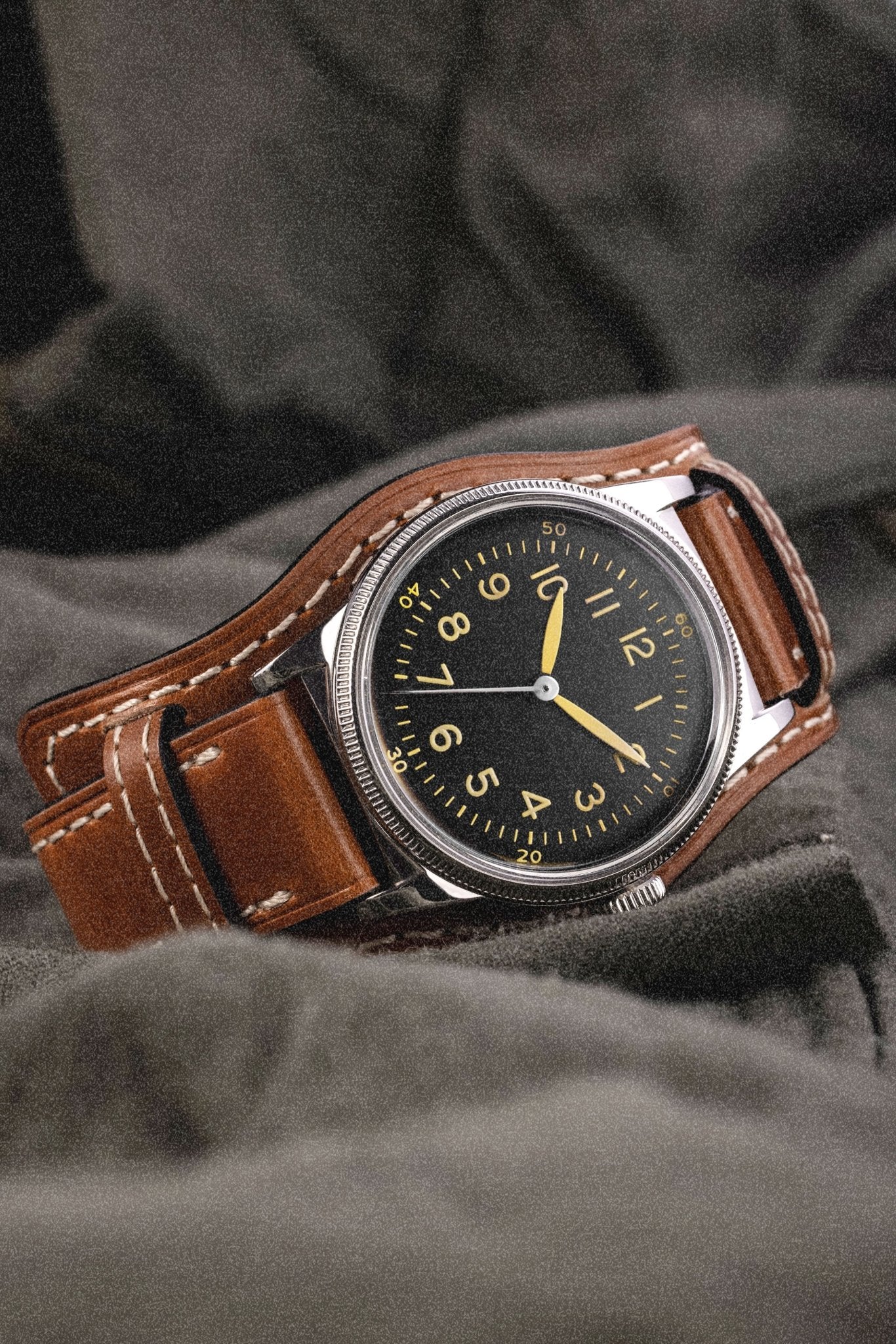
Watches weren’t accessories. They were tools. A reliable watch meant knowing when artillery would lift, when a patrol was overdue, when darkness would fall. In the Pacific, losing track of time could be fatal.

The Pacific Theater: Relentless Conditions
Unlike Europe, the Pacific offered no mercy. Heat corroded metal. Saltwater destroyed equipment. Jungle humidity rotted uniforms and fogged optics. Volcanic dust found its way into everything.
Men fought on coral reefs sharp enough to cut through boots, in jungles so dense daylight barely reached the ground, and on islands where fresh water was scarce. Equipment that worked in theory often failed in practice. Only the simplest, toughest tools endured.
That environment forged a brutal standard: if it couldn’t survive the Pacific, it didn’t belong there.
Guadalcanal: Endurance Without Certainty
Guadalcanal marked the first major Allied offensive in the Pacific and exposed how unprepared forces were for prolonged jungle warfare. The campaign stretched over six months, far longer than expected.
Troops fought in dense jungle with limited supply lines, frequent rain, and constant pressure from enemy forces. Disease, fatigue, and shortages were as dangerous as combat. Timing mattered for patrol rotations, resupply drops, and coordinated attacks, often under conditions where visibility and communication were poor.
Guadalcanal showed that survival depended not just on firepower, but on endurance and dependable equipment that could function day after day.

Midway: Precision Under Pressure
Midway was decided in hours, not months. A naval and aerial battle fought across hundreds of miles of open ocean, it depended entirely on timing, coordination, and accurate execution.
Aircraft launches, recovery windows, and attack runs had to align perfectly. A missed signal or mistimed maneuver could mean losing an entire squadron. There was no margin for error.
Midway demonstrated that in modern warfare, precision timing could outweigh numerical advantage, and that reliable instruments mattered as much as strategy.
Okinawa: Sustained Combat at Scale
Okinawa was the largest amphibious assault in the Pacific Theater and one of the longest battles of the war. Fighting lasted nearly three months under constant artillery fire, heavy rain, and difficult terrain.
Units operated in mud-filled trenches and exposed positions with no clear front line. Assaults, counterattacks, and evacuations ran around the clock. Time governed everything, from bombardment schedules to medical response.
Okinawa reflected the final, brutal phase of island hopping: sustained combat where reliability, coordination, and physical endurance were constantly tested.

Legacy of the Pacific
The Pacific War reshaped the modern world. It also reshaped how we think about tools, engineering, and endurance. The lessons learned on those islands about materials, design, and reliability, still echo today.
When we look back at island hopping, we don’t romanticize it. We respect it. The discipline, the sacrifice, and the relentless demand for equipment that simply worked.
That legacy belongs to the ocean, the islands, and the people who crossed impossible distances with nothing but determination and the tools they trusted.
Built for the Long Way Around
A watch inspired by the Pacific isn’t about nostalgia. It’s about values.
Strength over decoration. Precision over noise. Reliability over trends.
The Pacific didn’t care what you looked like. It cared whether your gear could survive salt, heat, shock, and time itself. That standard still matters.
Because whether you’re crossing oceans or navigating modern life, the principle remains the same:
Time doesn’t forgive mistakes.
And the tools you rely on should never fail you.

Leave a comment
This site is protected by hCaptcha and the hCaptcha Privacy Policy and Terms of Service apply.